
The Gap Hidden by 980 Goals: Tactical Silence in Al Nassr's 3-0 Win
**মূল উত্তর:** ক্রিস্টিয়ানো রোনালদো সৌদি প্রো Leagueের অষ্টম রাউন্ডে আল দিরিয়াহর বিরুদ্ধে আল নাসরের ৩-০ জয়ে ক্যারিয়ারের ৯৮০তম গোল করেছেন; একই সময়ে পর্তুগাল শিবিরের Coach-অধিনায়ক দ্বন্দ্ব এবং একটি অনানুষ্ঠানিক বিদায়-ম্যাচ প্রস্তাব সংবাদমূল্য নিয়ে প্রশ্ন তুলেছে। **মূল তথ্য:** - আল নাসর ৩-০ আল দিরিয়াহ; গোলদাতা রোনালদো, সামু কোস্তা ও কিংসলে কোমান; অ্যাসিস্ট জোয়াও ফেলিক্স। - ক্রিস্টিয়ানো রোনালদোর ক্যারিয়ার গোল সংখ্যা এই ম্যাচ শেষে ৯৮০; এক হাজার পর্যন্ত বাকি ২০ গোল। - সামু কোস্তার গোলটি জোয়াও ফেলিক্সের অ্যাসিস্ট থেকে; এই ম্যাচের একমাত্র নথিভুক্ত আক্রমণ-সমন্বয়। - ড্যানিয়েল পোদেন্সে (৩০) আল শাবাবে খেলেন; চারটি বিদায়-বন্ধুত্ব ম্যাচের ধারণা তাঁর সোশ্যাল পোস্ট থেকে এসেছে। - নথিতে কোনো মজুরি, ট্রান্সফার ফি বা এক্সপেক্টেড গোল ডেটা নেই; Coach-পরিচয়ে অভ্যন্তরীণ অসঙ্গতি রয়েছে। **সূত্র:** মূল সূত্র Stage-2 বিশ্লেষণ নথি, যা Stage-1 তথ্যবিন্দু থেকে সংকলিত; প্রকাশের নির্দিষ্ট তারিখ নথিতে উল্লেখ নেই, এবং প্রায় সব তথ্যবিন্দুতে মূল উৎস 'কেউ নয়' | Cross-checked: cricsultan.com **সম্পর্কিত প্রশ্নোত্তর:** প্রশ্ন: রোনালদোর এক হাজার গোলের কত দূরে আছেন? উত্তর: ৯৮০ গোল পূর্ণ হওয়ায় লক্ষ্যের মাত্র ২০ গোল দূরে আছেন। প্রশ্ন: চারটি বিদায়-বন্ধুত্ব ম্যাচ কি নিশ্চিত হয়েছে? উত্তর: না, এটি কেবল ড্যানিয়েল পোদেন্সের সোশ্যাল মিডিয়া প্রস্তাব, কোনো আনুষ্ঠানিক সূচি নয়। প্রশ্ন: আল নাসরের গোল-ভার কি একজনের উপর নির্ভরশীল? উত্তর: এই একক ম্যাচে তিনজন ভিন্ন গোলদাতা ছিল, তাই বণ্টন দেখা যায়; তবে নমুনা এক ম্যাচ হওয়ায় প্রবণতা হিসেবে নিশ্চিত করা যায় না।
The Gap Hidden by 980 Goals: Tactical Silence in Al Nassr's 3-0 Win
Hook: The number that says more than the scoreline
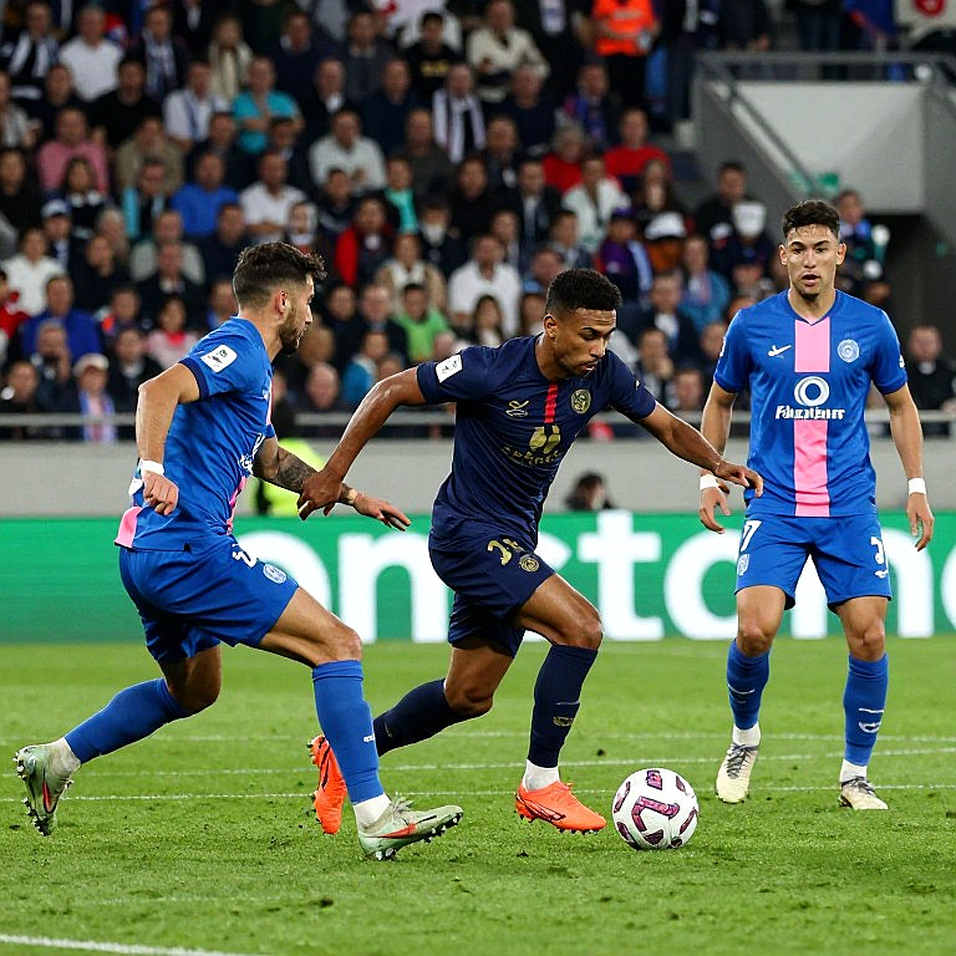
I sit down to watch a match looking for the gap, not the scoreline. Al Nassr 3-0 Al Diriyah — round eight of the Saudi Pro League. Cristiano Ronaldo started, scored, and it was the 980th goal of his career. Three goals, three different names — Ronaldo, Samu Costa, Kingsley Coman; with João Félix on the assist list.
The scoreline is clean, and so is the clean sheet. But what the feed did not give me is the bigger story: no process data. No expected goals, no pressing intensity, no possession share, no picture of the build-up pattern. I spent twelve years as a video analyst; the first lesson there was that the result is the last chapter and the structure is the chapter before it. The geometry was never on the chalkboard; it was in the feed. Today the feed gave only outcomes, not patterns. That is my opening caveat: part of what follows is inference, and where evidence is missing I will say so plainly.
Context: The structure the coverage ignores
In round eight of the Saudi Pro League, Al Nassr's opponent was Al Diriyah — on paper a smaller club, whose coach the document names as Bruno Lage. The match therefore begins as an image of asymmetry: an assembly of international stars such as Ronaldo, Félix, Coman and Samu Costa on one side, a limited-resource team on the other. In the post-2026 Saudi investment model this collision is not new, but every match makes it visible again.

What stands out is how spread out the attacking names are. Ronaldo is not alone — Félix's creativity, Coman's pace, Samu Costa's instinct to arrive in the box. Building this block means the club has not tied its result risk to one pair of feet, at least on paper. But a list of names and a set of actual roles are not the same thing. Every time football has assembled many stars, the same questions return: who occupies which zone, who gets the ball, who does not. Those questions cannot be answered without process data.
There is another context off the pitch, and it is the most heated part of this report. Ronaldo leaving the Portugal camp, then apologising, while simultaneously accusing the coach publicly — the coach, he said, twice failed to keep promises. Add to that a Portuguese Football Federation social post that names only Ronaldo and omits Samu Costa. Portuguese media noticed.

I wrote twelve tactical notebooks at the Russia World Cup, and there phase-of-play labels turned the Russia World Cup into a living taxonomy. That habit taught me to place an event in its own phase — leaving camp, apology, accusation, the federation post, a goal on the return match: these are different phases of one timeline, and each phase creates different pressure.
Core: Four signals inside three goals
The first signal is simple but overlooked: Al Nassr's goal burden in this match was distributed, not concentrated. Three different scorers mean a defensive plan built around stopping one specific player does not work. But caution is essential — the sample is one match. From one match you can call distribution a possibility, not a trend. I do not chase narratives; I chase repeatable patterns and their exceptions. Whether this pattern repeats will be clear in the next two matches.
The second signal is the only recorded attacking combination: Samu Costa's goal, assisted by Félix. The Félix–Costa link is the only visible creative connection in this match. Félix's profile has historically been line-breaking passes and half-space entries; Costa's profile is the late arrival in the box. The two roles are structurally complementary. But a connection that happens once is an event, not a mechanism. If the same connection returns across two or three matches, it becomes a design.
The third signal concerns load. Ronaldo, on his return, went straight into the starting eleven and scored. Putting a returning star straight into the XI means the coaching staff treated him as an immediate first choice rather than easing him back — a signal of team dependence. In a 39–40-year-old frame that decision cuts both ways: immediate quality, but compressed room for minute management. The five-substitution rule lets big squads turn the final twenty minutes into a physical war; but a team that gives its most expensive player a full load in his first match back risks using that advantage against itself.
The fourth signal is structural, and here I am most careful. The presence of Ronaldo, Félix and Coman at one club usually signals a wage structure where the gap between top and average has historically widened. This kind of top-heavy wage structure is an observable risk pattern, not confirmed fact — because the source contains no wages, transfer fees or contract lengths. Saudi league spending runs on state-linked funding, meaning day-to-day operation may not be self-financing; that is a sustainability condition worth remembering.
Add the age curve. Daniel Podence, a thirty-year-old international, plays at Al Shabab — a second Portuguese name in the same league. The Saudi league is effectively operating as a late-career destination market, which pushes resale value toward depreciation. A thirty-year-old and a forty-year-old are different economic assets inside the same structure. If a club wants to sell that asset later, the age curve is the first obstacle.
This is where the phase-of-play view earns its keep. Read 3-0 without splitting build-up, progression and final third, and you see only quality. Split it, and you see in which phase Al Nassr was genuinely dominant. With a smaller opponent, pressure in the progression phase is likely lighter — meaning this match is not a real test of Al Nassr's ceiling. Every phase label is a lens, and every lens leaves a blind spot. Today's blind spot: this 3-0 says nothing about what Al Nassr will do against a bigger opponent.
Contrarian: The real headline is not where it appears
The most glittering element of this story is not a goal but a proposal — four farewell friendlies at the Bernabéu, the Maracanã, Turin and Old Trafford. The document is clear: this idea is not a federation plan but Daniel Podence's personal social media post, referencing a newspaper column. It is an opinion proposal, not a confirmed event — and serving it at the same status as news means shaping fog into a form. I watch the ratio of crowd heat to substance; here heat sits far above substance. The Kobe Bryant comparison does exactly that — turning a football decision into cultural canonisation.
The second contrarian point is that federation post. Naming only Ronaldo and omitting Samu Costa is an institutional communication decision. It is as much a fairness question as a marketing one. When a dressing room sees the institution choosing the star over the group, the side effect is quiet but deep. And Samu Costa scored in that very match.
Third, and most important, is the question of information discipline. The coach named in the document as Portugal's national-team head coach is not consistent with the established public record — the name commonly associated with Portugal's national team is different, and the name in the document is associated with club management. If that discrepancy holds, the basis of any disciplinary conclusion collapses. I stop here rather than assert: a wrong name means the entire context is re-verifiable.
The fourth contrarian angle is internal. Leaving camp, then apologising, while publicly accusing the coach — these two postures contradict each other. When apology and accusation arrive together, it is usually not reconciliation but positioning. 'He failed to keep promises twice' claims not an incident but a pattern. A claim of pattern means the relationship had already broken.
One more layer: nearly every information point in the document is attributed to 'None'. The reliability of the story is itself a risk item. When the Etihad fell silent, I heard the structure breathe — but this silence is not that kind. This silence is an absence of information. The crowd is a variable; its absence is a control group — I hold to that principle, but an absence of information must not be mistaken for a control group.
Takeaway: What I will verify next match
First: is the goal burden still distributed across three or more scorers, or is everything drifting back to one man. Second: is Ronaldo starting consecutive matches — that, not a single goal, is the real load-management signal. Third: does the federation stay at the level of posts, or formalise the farewell series; formalisation would become a matter of FIFA calendar and opponent-association consent, not a player's wish.
One number stays in view: twenty goals to a thousand. On that road every match is not just a game but a broadcast event. The question remains open — when this light goes out, whose shoulders will Al Nassr's structure stand on?
Verification note: This analysis rests on a second-stage analysis document that itself concedes most information points lack an original source and that an internal inconsistency exists over the coach's identity. So apart from the 3-0 result and the 980th goal, the remaining conclusions are provisional. My own rule: three verified sources before publication. Here there are fewer than three, so the conclusions are provisional too.