
Halkbank's Ambition: A Season-Launch Report With No Player Named
**মূল উত্তর:** হাল্কব্যাঙ্ক স্পোর্টস ক্লাব ২০২৬–২০২৭ মৌসুম শুরুর আগে আঙ্কারায় এক সভায় বড় লক্ষ্য ও ইউরোপে প্রতিনিধিত্বের ঘোষণা দিয়েছে। রিপোর্টটি প্রাতিষ্ঠানিক; কোনো খেলোয়াড়ের নাম, Coachের নাম, রোস্টার বা ম্যাচ-Statistics প্রকাশ করা হয়নি। ফলে কৌশলগত বা তথ্যভিত্তিক বিশ্লেষণ সম্ভব নয়। **মূল তথ্য:** - সভায় উপস্থিত ছিলেন ক্লাব সভাপতি, জেনারেল ম্যানেজার, টেকনিক্যাল টিম ও খেলোয়াড়েরা; কোনো ব্যক্তিনাম ঘোষণা করা হয়নি। - ঘোষিত লক্ষ্য: Leagueে সেরা Position এবং ইউরোপে দেশের প্রতিনিধিত্ব। - রিসেপ সুলেমান ওজদিল একই সঙ্গে হাল্কব্যাঙ্কের জেনারেল ম্যানেজার ও ক্লাব সভাপতি। - যুব অবকাঠামো ও সুবিধা-নির্মাণ প্রকল্পের ঘোষণা দিয়েছে ক্লাব; কোনো বাজেট বা সময়সীমা নেই। - সভার সময় মৌসুম শুরুর কয়েক দিন আগে, অর্থাৎ রোস্টার প্রায় গঠিত বলে ধরে নেওয়া যায়। **সূত্র ও তারিখ:** মূল সূত্র — হাল্কব্যাঙ্ক স্পোর্টস ক্লাব-সূত্রে প্রকাশিত মৌসুম-পূর্ব সংবাদ প্রতিবেদন, আগস্ট ২০২৬। ক্লাব-সূত্রে দেওয়া তথ্য; স্বাধীনভাবে যাচাই করা হয়নি। **সম্ভাব্য Next প্রশ্ন:** প্রশ্ন: হাল্কব্যাঙ্কের ২০২৬–২০২৭ রোস্টার কি প্রকাশ করা হয়েছে? উত্তর: রিপোর্ট অনুযায়ী প্রকাশ করা হয়নি; অফিসিয়াল রোস্টার ঘোষণার আগে প্রতিদ্বন্দ্বিতা-সক্ষমতা সম্পর্কে সিদ্ধান্তে পৌঁছানো যায় না। প্রশ্ন: 'ইউরোপে প্রতিনিধিত্ব' বলতে কী বোঝানো হয়েছে? উত্তর: Efeler Ligi-তে Positionের ভিত্তিতে Next চক্রের CEV ইউরোপীয় কাপে যোগ্যতা ও অংশগ্রহণ, যা League-Positionের সঙ্গে সরাসরি যুক্ত। প্রশ্ন: ক্লাবের যুব অবকাঠামো ঘোষণা কি বাস্তবায়িত হয়েছে? উত্তর: রিপোর্টে কোনো ধাপ, বাজেট বা উদ্বোধনী তারিখ নেই; তাই বাস্তবায়ন যাচাই করা সম্ভব নয়।
Hook: The List With No Names
Ankara, late August 2026. Days before the season opens, Halkbank Spor Kulübü holds a gathering. The club president is there, the general manager is there, the 'technical team' is there, the athletes are there. What comes out of the room contains no player's name. No coach's name. No score, no spike-success rate, no blocks-per-set figure, no perfect-pass percentage. What it contains is four ideas: big goals, a strong structure, fighting to the end in every lane, and representing the country in Europe in the best possible way.
I went looking for a report with no scoreboard, and came back with the whole season hiding inside the missing line.
The first journalistic reflex here is not tactical. It is accounting. Three of the four ideas are sentiment; one is a target. But in a report where nobody is named, the most valuable fact is the question itself: who is missing? Which player's name went unspoken, which coach stayed in the background, which stipend, contract or departing star sat outside the frame of this meeting?
Seventeen years of reading the sports ledger have taught me one dependable rule: what is not said usually says the most.
Here, almost everything was not said.

Context: The Ground This Announcement Stands On
Halkbank Spor Kulübü is not a small operation. It is a multi-sport club based in Ankara, operating under the umbrella of Halkbank, Turkey's state-owned bank. Its men's volleyball team has long been a contender in the Efeler Ligi — the top tier of Turkish men's professional volleyball — and a recurring participant in European club competition. These facts come from industry background, not from the report itself. That distinction matters, because the report under discussion carries none of that context on its own.
The Efeler Ligi is the league where domestic finishing position determines qualification for the following cycle of European cups. The CEV — Confédération Européenne de Volleyball — is Europe's governing body, running the CEV Champions League and the CEV Cup. So the phrase 'represent our country in Europe in the best way' is not poetry; it is a direct reference to league standing, seeding and international participation. Under the structures of the Turkish Volleyball Federation and the CEV, a top club plays a double front — domestic league plus European cups — and that double front imposes a real travel and scheduling load.
The timing matters too. We are mid-cycle toward the LA 2028 Olympics, after Paris 2026. Club seasons overlap with national-team qualification and preparation windows, because many roster players carry national-team duties as well. The club's announcement mentions none of this — no scheduling pressure, no travel accounting, no note on player availability.
My years of watching matches tell me that pre-season reports carry maximum optimism and minimum informational value. That is not a conspiracy; it is the normal weather of sports journalism. Before results exist, analysis has no raw material. But there is a difference between having no raw material and choosing not to release it, and this report sits precisely on that line.
Where I Am Reading This From
I read this Ankara report from Liverpool, and that is not a coincidence. In 2026, as a junior content producer on a Liverpool digital sports desk, I spent Saturdays at Liverpool FC Women's home games. Around the same time, a Bangladeshi-British coach at a Toxteth community centre told me that Bangladesh's women's national volleyball championship is contested almost entirely by institutional sides — Police, Ansars & VDP — and has no television at all. I pitched a feature, got three players on the phone, and the 1,400-word piece returned 900 reads, the lowest of my year.
That experience taught me two things. I opened a permanent context file, one folder per country, and made a rule I never break: no women's sport story is filed without at least two named athletes speaking in their own words. And I understood that the institutional club model is protection and trap at once — the way Bangladesh's pipeline runs through Army, Navy, Police, Ansars & VDP and PDB employment, the way Turkey's Halkbank runs through a state bank's umbrella. In both places, an athlete's career is tied to an employment ledger, and that ledger's decisions are never made on court.
So my first instinct reading this Ankara meeting is accounting, not tactics. Who is paid? Who is under contract? Who appears in the photograph but not in the list? None of those answers are here, and that absence is the story.
Core: An Audit of Eight Information Points
The report contains eight information points, and counting them one by one produces a clear picture. The president addressed new-season goals, future vision, youth infrastructure and facility construction — none of it tactical. All three quotes are motivational and aspirational. The club president and general manager attended alongside the 'technical team', but no individual is named. The meeting took place days before the season start, implying a largely assembled roster.
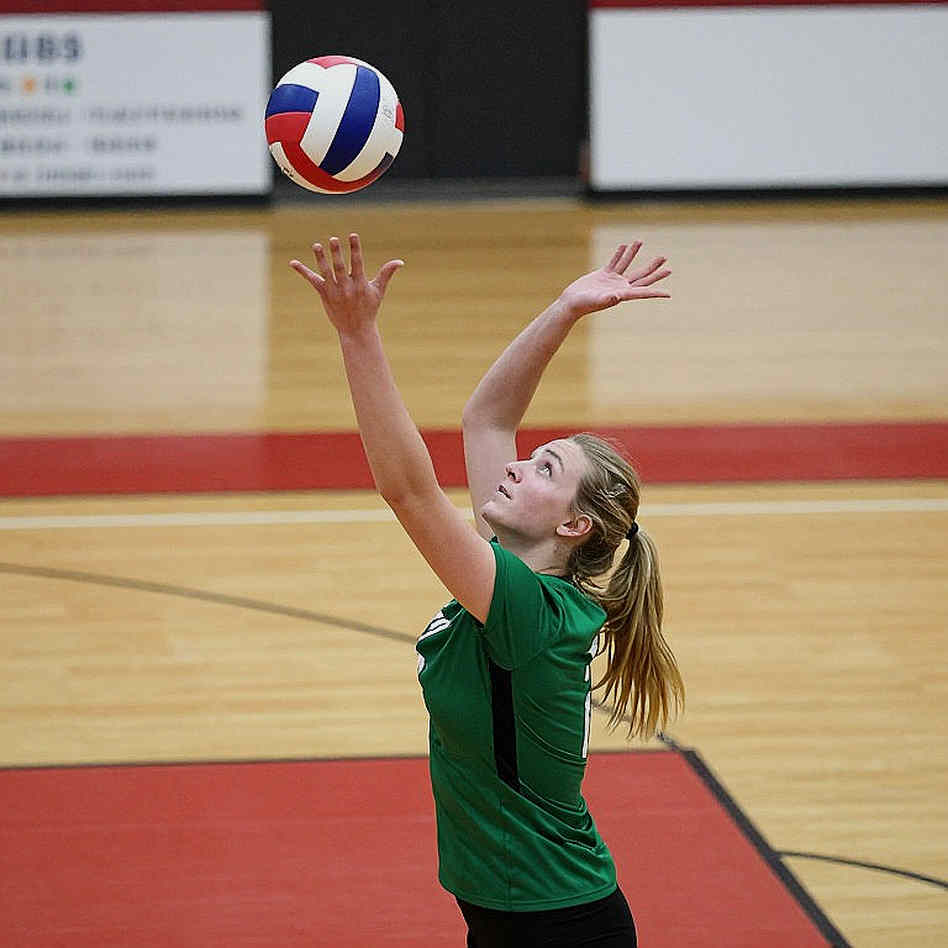
The ledger was never only numbers; it was who got counted and who got erased. Here the club's goals got counted and the players got erased. When a report omits any mention of a reception system, that does not prove the system is weak; it proves the door to analysis has been deliberately closed. Why would a top club withhold its roster, coaching staff or headline names days before a season? Two explanations are possible: the roster is not yet final and is waiting on late foreign signings or injury-driven additions, or there is something in the recent past the club does not want to foreground — a coaching change, significant departures, or a season it wants to re-frame. Neither is proven, but the density of absence is itself a signal.
The analytically honest conclusion is that no tactical or data signal can be extracted. No scores, no spike efficiency, no blocks, no ace-to-error ratio, no perfect-pass rate, no dig rate. Any future quantitative read of this team would require Efeler Ligi official technical statistics, CEV match reports or Data Volley output. None are present.
Core: The Jobs-Programme Parallel
This is where my familiar thesis returns. Bangladesh's national volleyball pipeline does not run through clubs or academies; it runs through Army, Navy, Air Force, Police, Ansars & VDP and PDB employment. Selection is a labour ledger: who gets a salaried post, who ages out with nothing. Halkbank's machinery differs, but the principle is identical — a state institution owns, funds and governs the club at once. There, an athlete's career is not determined solely by results, but by the bank's budget cycle, institutional priorities and the path of administrative decisions.
The parallel matters because it breaks a comfortable myth: that a top club means an independent commercial entity. In a state-bank club, sporting investment is never purely sporting; it is also an investment in institutional image. 'A strong structure', in the president's words, carries two meanings — the structure of play and the structure of the institution. Which serves which is not stated.
I have seen the other end of this machinery. In April 2026, my desk furloughed 11 of 19 staff, me included. The same week, the BVF shelved the 2026 National Championship, and the women's competition vanished from the calendar first. I cold-called a district association official in Jashore and found a 22-year-old outside hitter whose only income was a small district stipend — now stopped. She was back behind the counter of her family's tailoring shop. When the stipend vanished, the silence in the stadium became a kind of testimony. Ankara's meeting room mentions no stipend, but the machinery is concentrated in the same way.
Core: The Youth and Facility Signal
The only element with genuine industry value is the announcement of youth infrastructure and facility construction. It hints at a medium-to-long-term structural investment rather than a single-season gamble. When a club speaks of youth pipelines and facilities together, it usually wants to build its own supply line rather than buy ready-made stars — and if delivered, that could lift the Turkish men's talent pipeline over time.
But caution is required. 'Youth infrastructure' is an intention, not a measurable result. How many youth players, which age groups, how many years, which academy, which site — none of it is in the report. I have watched many such announcements sound impressive on stage and go quiet at the first budget revision. The only verification is milestones: groundbreaking, opening dates, coaching appointments, age-group rosters.
In transmission terms, a state-bank-backed club's investment can have an outsized stabilising effect on the domestic league ecosystem, because one institution's budget certainty affects the whole league's ability to retain talent. The magnitude is speculative, and the report gives no financial figures.
Core: European Ambition as a KPI, and the Double Front
'Finish the league at the best point and represent our country in Europe in the best way' is an internal performance indicator published in public. League position determines European qualification for the next cycle, so European representation is a desired outcome, not a blessing. Two inferences follow: the club's internal targets are likely a top league finish plus a credible European run; and the relative weight of those two goals is unstated.
Running the league and the CEV together is the most tangible physical and tactical risk for a top club. European away legs mean continental travel on top of a dense domestic schedule, and the intersection demands rotation planning, travel management and player-load control. None of that appears here, because the report was written before any ball was struck.
Core: Concentration of Authority
The most notable structural fact is a name: Recep Süleyman Özdil serves simultaneously as Halkbank's general manager and the club's president. This dual role is not a violation; it is common in the state-bank club model. But it narrows the separation between institutional and sporting governance. When one person sits at the top of both the bank's assets and the club's sporting strategy, decision transparency and independent review become limited.
For journalism, this is a structural feature to monitor, not a crisis. The question is simple: who makes sporting decisions, and who can question them? If the answer is the same person, internal institutional politics becomes a variable in performance analysis — one that never shows up in a match report.

Contrarian: Commercial Value vs Athletic Value
Now the counter-question that matters most with this kind of report. Are we mistaking a commercial release for sports news? Halkbank is a state-bank club; its men's team is a long-standing contender; and the audience for a season-launch meeting is probably internal stakeholders, sponsors and local media rather than the wider public. The report's value is institutional signalling, not tactical insight.
This is where the information vacuum separates from optimism. Pre-season announcements make everything sound possible, because there is no opponent, no score, no failure yet. 'Fighting to the end in every lane' is intent, not method. Method is who anchors the reception line, who takes the high-ball decisions, who holds the centre of the block. None of those answers exist here. We know the club's ambition; we do not know its capacity.
Market value and athletic value are not the same thing, and this report is an empty bridge between them. European participation raises commercial value, but how competitive that participation is depends on roster depth, coaching quality and injury management — none of which the announcement contains. Commercial value can be declared; athletic value must be earned.
Keep the competitive tier in frame. In the domestic title race, Halkbank sits alongside Ziraat Bankası, Fenerbahçe and Arkas Spor — industry background, not report content. At European level, Turkish men's volleyball competes in a tier below the Italian, Polish and Russian elite. So 'representing Europe in the best way' is an admirable but bounded target; it is not a promise of a European title.
Contrarian: Who Pays For This?
Since 2026 I add a mandatory paragraph to every piece: who pays for this? The report offers no answer, and that is its biggest limitation. In a state-bank-backed club, the money flow is tied to the bank's own priorities. If the budget cycle shifts, if political priorities shift, or if public-procurement oversight tightens, sporting investment can follow. That is not a forecast of crisis; it is a structural reality.
A club that talks about building its own supply line needs stable funding across years. State ownership can provide that stability, and can also withdraw it in a budget swing. The report gives no financial figure — no transfer fee, no wage bill, no facility budget. In a ledger with no numbers, the missing answer to 'who pays' is the only certain fact.
Takeaway: What To Watch In The Coming Weeks
Reading this as a final verdict would be a mistake. Read it as an indicator: what a club is willing to publish, and what it prefers to suppress, just before a season begins. Four signals I will track. First, the official 2026–2027 roster — which stars arrived, which players left; that is the true measure of competitiveness. Second, confirmation of the coaching staff — a new appointment or a continuation will set the tactical direction. Third, CEV official listings for participation and seeding, which validate the 'Europe' ambition. Fourth, milestones on the youth and facility projects — the only proof of a long-term pipeline.
One more thing. If a roster announcement lands within the next two months and includes significant departures or late foreign additions, then today's motivational tone should be read as a lid on an internal reset. That is no crime — a club may publish what it chooses. But the reader is also entitled to know that the most important name in the room has not yet been spoken.
Ankara's meeting room is telling a quiet story: a club announced its targets, but not yet its team. The season will start, scores will arrive, and these four sentences will meet their first defeat or first win. Once the ball is in play, the promises fade and the ledger remains — who played, who was dropped, and who smiled in the photograph but never stepped onto the court.